Route Density vs. the Flavor-Chaser: Why Market Coverage Is Killing Your Margins
The beverage industry is trading volume for complexity — one niche seltzer stop at a time. A route profitability audit of what a single 20-minute delivery stop actually costs.
Route Density vs. the Flavor-Chaser: A Love Story That's Costing You $1,000 a Week
At some point in the life of every distribution route, someone made a decision that seemed reasonable at the time. They added a stop. A small account, sure, but the brand wanted the door. One case of specialty seltzer, 20 minutes out of the way, maybe breaks even on a good day.
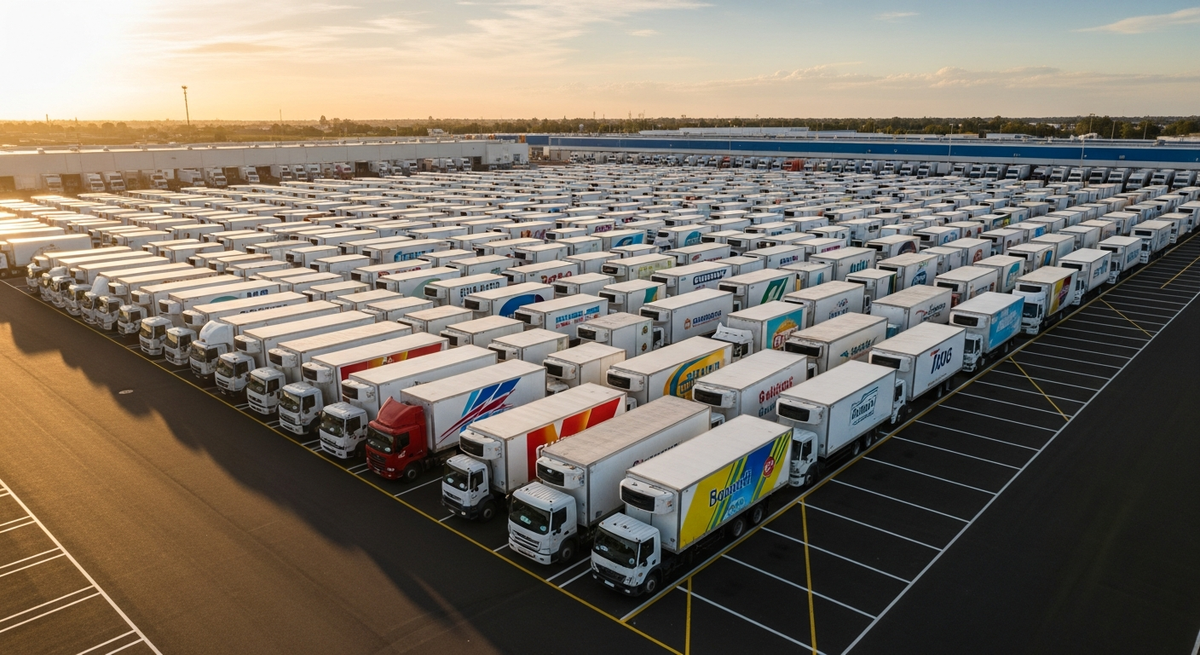
Then they added another one. And another. And now your driver is doing 30 stops on a route that used to do 22, running 90 minutes late to your anchor accounts, and the overtime line on your P&L looks like it's training for a half marathon.
Welcome to the Flavor-Chaser problem. It's not one bad stop. It's a pattern of bad stops that no one wants to have the conversation about because the brand relationships feel complicated.
They're not that complicated. The math is just being ignored.
What a Stop Actually Costs (The Number Nobody Frames Properly)
Let's build it from scratch, because apparently this needs to happen more often than it does.
| Cost Component | Per Stop |
|---|---|
| Driver time (20 min, fully burdened — wages, benefits, tax) | $12-18 |
| Fuel and vehicle allocation | $4-8 |
| Depreciation and maintenance per stop | $3-5 |
| Administrative tail (invoice, signature, exception processing) | $2-4 |
| Total cost per stop | $21-35 |
That's a clean stop. Add a back-of-house delivery, a receiver who's on break, a parking situation, or a driver who discovers the account moved and nobody updated the address, and you're at $45-60 without breaking a sweat.
Now look at the revenue side of a Flavor-Chaser stop: one case of a specialty SKU, wholesale around $28, gross margin of maybe $5. The stop costs more than the margin it generates. Every time. That account is not a customer. That account is a recurring expense with a beer order attached.
The Cascade Nobody Tracks
Here's what makes the Flavor-Chaser insidious: it's not just the marginal stop that's losing money. It's what that stop does to every other stop on the route.
Every low-volume detour:
- Pushes service windows at profitable accounts, which erodes relationships that took years to build
- Extends total route time past scheduled hours, which is where overtime lives
- Creates invoice volume disproportionate to revenue — more credit memos, more exceptions, more phone calls
- Consumes driver attention and goodwill that could be going toward your top 20% of accounts
Run the comparison:
| Route Type | Stops/Day | Rev/Stop | Revenue | Cost | Net |
|---|---|---|---|---|---|
| Density-optimized | 22 | $180 | $3,960 | $1,400 | $2,560 |
| Flavor-Chasing | 30 | $110 | $3,300 | $1,750 | $1,550 |
Eight more stops. Forty percent less profit. And a driver who's going to start looking at job listings around mile 180.
The Conversation Nobody Wants to Have With Sales
Here is the actual problem: sales culture counts doors. Distribution culture counts margin. These two things are not the same, and in most three-tier operations, sales culture wins the argument because it's louder and its wins are visible on a dashboard while your route economics are buried in a spreadsheet no one opens.
The move — the uncomfortable, brand-relationship-straining, absolutely-necessary move — is a minimum drop-size threshold. A floor below which an account goes to will-call, gets consolidated onto a less frequent delivery schedule, or gets a polite conversation about whether the relationship makes economic sense.
Distributors who have implemented drop-size minimums report:
- 8-14% improvement in revenue per stop
- 10-18% reduction in route operating cost
- Better service outcomes at top-tier accounts who notice when their driver shows up on time for once
The Route Profitability Audit: Two Numbers, One Spreadsheet
Your DMS has the data. You just haven't built the report.
Pull true cost per stop and gross margin per stop for every account on every route. Calculate the ratio. Any account where cost exceeds margin is a net liability. Put those accounts on a list. Review the list quarterly. Make decisions.
The distributors doing this are building a cost structure that compounds in their favor. The ones who aren't are about to have a very interesting Q3 conversation about why route costs are up 18% year-over-year on flat revenue.
The Flavor-Chaser is not a sales problem. It's a data problem. Get the data.