The SKU Apocalypse: Why Your Warehouse Is Now a $10M Jigsaw Puzzle
You didn't build a warehouse. You built a $10M jigsaw puzzle with 500 pieces, and someone has to reassemble it every single day. A deep-dive into Pick-Path Friction and the compounding cost of variety-pack proliferation.
The SKU Apocalypse: Why Your Warehouse Is Now a $10M Jigsaw Puzzle
There is a moment — and if you've managed a distribution warehouse in the last five years, you know exactly when it happened — where the SKU count crossed some invisible threshold and the operation quietly stopped making sense.
You didn't notice it all at once. It crept up on you. One limited-edition variety pack here, a "platform extension" there, a co-branded collab that the sales team was very excited about for approximately six weeks before it went out-of-code in slot C-14 and nobody wanted to have the conversation about the dunnage pile.
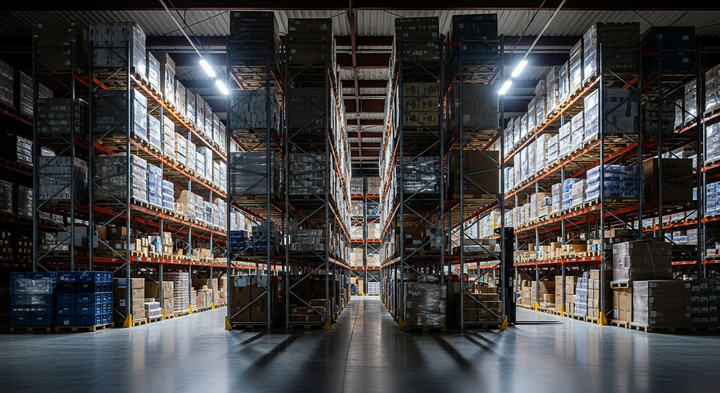
And now here you are. Five hundred SKUs, a pick-line that looks like someone spilled a rainbow over a stainless steel floor, and a warehouse labor budget that's growing faster than your volume.
Congratulations. You've been hit by the SKU Apocalypse.
Variety Packs: The Murder Weapon Nobody Is Talking About
Before we get into the math, let's spend a moment appreciating the variety pack, which is the single most operationally destructive product format in modern beverage distribution and also, somehow, continues to be the format that brand innovation teams keep championing.
Here is what a variety pack does to your warehouse:
It multiplies your effective SKU count without multiplying your revenue.
A 12-pack variety pack containing four flavors is not one SKU. It is a picking and fulfillment problem that requires your team to assemble product that the brewery should have assembled before it left the dock. Except that's not how most variety packs work anymore. They come pre-assembled, which means you now have a SKU that contains sub-components of four other SKUs, creates inventory allocation complexity, and generates mispick opportunities at every stage of the pick-line.
And then they do it again with a second variety pack. And a third. Each one slightly different from the last, because the brand manager wanted to "test the seasonal format."
Pick-Path Friction: The Cost Nobody Budgets
Here is the number that should be in every SKU approval meeting but never is: the incremental pick-path cost per new SKU.
Pick-Path Friction is what happens when your pickers spend more time navigating warehouse geography than actually picking product. It is a function of three variables: slot count, velocity distribution, and visual similarity between SKUs. In the RTD and variety pack era, all three variables are moving in the wrong direction simultaneously.
The math:
| SKU Count | Avg Pick Travel (10-line order) | Mispick Rate | Labor Premium |
|---|---|---|---|
| 50 | ~200 ft | ~0.5% | Baseline |
| 150 | ~380 ft | ~0.8% | +40% |
| 300 | ~520 ft | ~1.2% | +85% |
| 500 | ~700 ft | ~1.8% | +150-180% |
Ten times the SKUs. Two and a half times the labor cost — and that's assuming your slotting discipline is excellent, which it probably isn't, because nobody has time to run a velocity analysis when there are three new SKU launches coming in next week and the rep from the new craft lager brand keeps calling.
The Variety Pack Multiplier
Standard SKU proliferation is bad. Variety pack proliferation is worse, because variety packs introduce a specific failure mode that single-SKU products don't have: the assembly error.
When a picker pulls the wrong single-serve can, you've got a mispick. The correction is relatively straightforward — catch it at the dock, correct the invoice, absorb the minor delay. When a variety pack gets assembled incorrectly — one sleeve of the wrong flavor mixed into a pre-pack case — you have a quality problem that doesn't always get caught at the dock.
It gets caught by the account's buyer, who is now on the phone. It gets caught by the end consumer, who posts about it. It gets caught at the next depletion audit, when someone notices that the summer variety pack sold through faster on paper than it did at retail, because six cases of it were actually half Mango Lime and half Original and the account just quietly returned the remainder.
Every one of those failure modes has a dollar cost. None of them show up on the SKU launch budget.
The $10 Million Jigsaw Puzzle
Let's build the actual cost model for a 500-SKU distribution operation running variety packs at scale.
Baseline annual labor cost at 50 SKUs, medium-volume route operation: approximately $1.2M in warehouse labor (fully burdened).
At 500 SKUs with 150 variety pack configurations, applying the Pick-Path Friction multiplier:
| Cost Component | Annual Estimate |
|---|---|
| Warehouse labor (pick-path premium) | +$1.8M vs. baseline |
| Mispick correction (labor + credits + redelivery) | +$280K |
| Slotting and replenishment overhead | +$190K |
| Out-of-code write-offs (low-velocity variety SKUs) | +$340K |
| Receiving and putaway complexity | +$210K |
| Total incremental annual cost vs. 50-SKU baseline | ~$2.8M |
Across the median-size regional distribution operation, the SKU Apocalypse costs somewhere between $2M and $4M annually in operational overhead that doesn't appear on any supplier invoice and doesn't get factored into any new product approval conversation.
The jigsaw puzzle has 500 pieces. Someone has to put it together every single day. That someone is your pick team. And they're getting slower and more expensive with every new flavor the innovation department approves.
Who Actually Owns This Problem
Not the supplier. This is worth repeating until it stops being a surprise.
The supplier's economics do not change based on your pick-path complexity. Their cost-per-case is the same whether your picker walks 200 feet to pull it or 700 feet. Their margin is the same whether your mispick rate is 0.5% or 1.8%. Their brand manager's KPI is door count and velocity at retail, not your warehouse efficiency.
The distributor owns the Pick-Path Friction cost. The distributor pays the overtime. The distributor absorbs the out-of-code write-offs. The distributor manages the driver who's running 90 minutes behind because the variety pack assembly took longer than it was supposed to.
This is the structural reality of the three-tier system that nobody discusses in public because the brand relationships feel too important to stress-test with math.
They are not more important than the math. They are just louder.
The Operational Response
You have three levers. None of them are easy. All of them are necessary.
1. Velocity-based slotting with mandatory quarterly reviews.
Your fastest-moving SKUs belong at the front of the pick-line, closest to the dock. Not just at implementation — on an ongoing basis, as velocities shift with seasons and promotional cycles. Most operations implement velocity slotting once and never update it. The result is a pick-line that was optimized for last year's portfolio running this year's chaos.
2. Variety pack contribution modeling.
Assign every variety pack its full operational cost — including assembly error rate, mispick premium, and out-of-code exposure based on the slowest-turning sub-component flavor. When a variety pack's full-cost contribution model shows negative net margin, that's a negotiation conversation with the supplier, not an internal problem to absorb silently.
3. SKU rationalization with teeth.
Quarterly reviews. A kill threshold — a metric below which a SKU moves to will-call, gets deactivated from the standard pick-line, or gets removed from the portfolio entirely. Not as a threat to supplier relationships, but as a financial discipline that protects the operation from the compounding cost of carrying low-velocity complexity.
The One Question to Ask Before Every New SKU Meeting
Before the brand rep opens the cooler, before the pitch deck loads, before the innovation team explains why this limited-edition botanical seltzer is going to "resonate with the wellness consumer" — ask one question:
"What is the full-cost per-case impact on our pick-line at the projected velocity, including variety pack assembly error rate and out-of-code exposure?"
If nobody in the room can answer that question, the SKU does not get approved until someone can.
The brands that understand this will build better products. The brands that don't will keep sending you variety packs with twelve-week shelf lives and calling it innovation.
You have the math. Use it.